Changing out your morning coffee for something new doesn’t happen often. I mean: would you stop drinking coffee? I wouldn’t. But I am not opposed to trying something new, especially if it’s good for me. Bulletproof coffee is the new “hot” drink, and it actually tastes pretty good.
We’re going to look at bulletproof coffee benefits, explain why you may want to start drinking it and see if this drink is worth drinking instead of your morning brew.
But before we start, what the heck is bulletproof coffee?
What the Heck is Bulletproof Coffee?
If you’re envisioning coffee beans with a Kevlar vest on, you’re way off. Instead, bulletproof coffee is part of a diet, and the goal is to drink this coffee rather than eat your traditional, carb-filled breakfast.
This coffee consists of:
High-quality coffee beans
Unsalted butter
Coconut oil (or a medium chain triglyceride)
You brew up the coffee like normal, blend up the ingredients really well and end with a brew that is rather similar to a latte and really creamy.
It’s very important that you focus on quality ingredients when making your cup of coffee. You’ll want to focus on:
Organic, grass-fed butter
Good quality coconut oil
You won’t be adding any milk, so you’ll be drinking a black coffee, although you won’t notice it with the coconut oil and grass-fed butter mixed in.
Now that we’ve defined bulletproof coffee for you, let’s answer an important question: What are the benefits of bulletproof coffee?
Let’s find out.
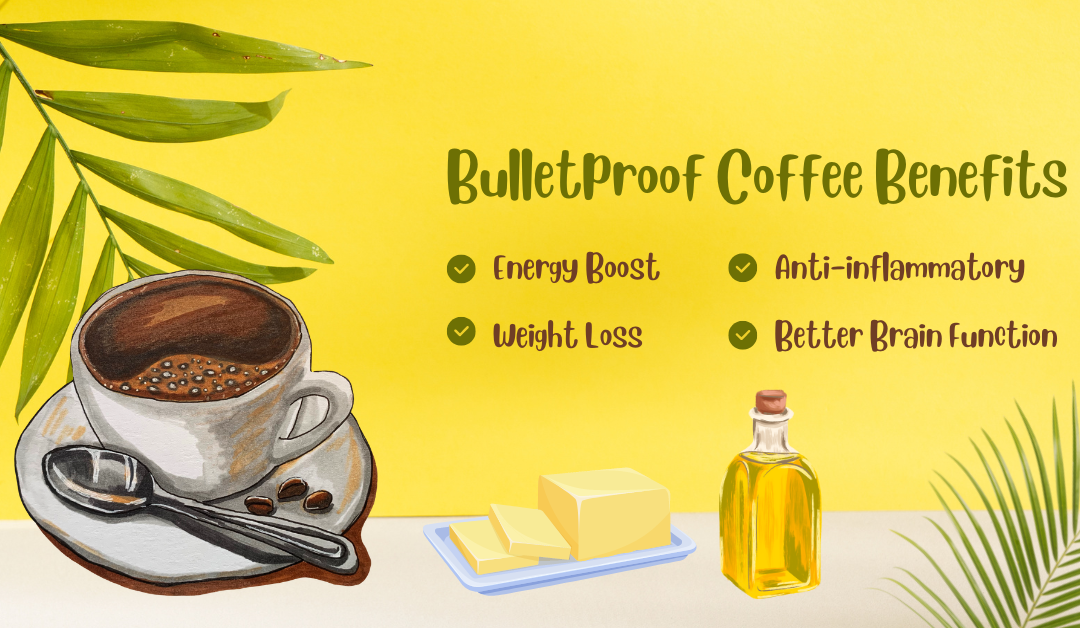
4 Must-Read Bulletproof Coffee Benefits
1. Energy Boost Instead of a Crash
In the morning, most people eat breakfast foods that cause them to crash. A regular diet may consist of:
Pancakes
French toast
English muffins
Pop tarts
Cereal
And in the morning, everyone seems to be in a rush, so they’ll grab the absolute fastest thing to eat. No one is thinking about a balanced diet or their digestive health when they’re rushing off to work.
One of the most important bulletproof coffee health benefits is that you’ll feel filled with energy for longer. You don’t have to worry about feeling very energetic after eating only to experience a blood sugar crash shortly after.
As an alternative to breakfast, bulletproof coffee is rather impressive.
Of course, you get the jolt of energy from coffee, but research shows that the real energy booster comes from the omega-3 and omega-6 fats that:
Slow metabolism of the butter
Cause you to hold onto energy
Naturally protect against crashing
MCT oil also aids in energy retention and the boosting effects of bulletproof coffee. MCTs are metabolized quickly for energy, while butter will work to help you maintain energy stores. Without the carbs and sugar, you won’t experience the immediate energy boost followed by the “did I even sleep” feeling 30 minutes later with bulletproof coffee.
2. Encourages Weight Loss
Most of the bulletproof coffee benefits that you’ll read about online deal with the keto diet. People that follow this diet need to have high fat in their diet, and they want to remain in a state of ketosis.
Reduces side effects experienced with keto (i.e., keto flu)
Anyone on a low-carb diet who wants to find something to eat for breakfast should consider coffee with butter or ghee and an MCT oil. You can even have it after your morning workout without worrying about carbs being stored as fat, like what would happen with other breakfast foods.
Keto works for a lot of people because it uses body fat for energy and can help them improve their body composition.
In short: bulletproof coffee is a good breakfast substitute.
3. Anti-inflammatory Properties
Bulletproof coffee benefits also include anti-inflammation. MCT oils have been shown in studies to have anti-inflammation properties. The omega-fatty acids in the grass-fed butter also lend their own anti-inflammatory effects to your morning brew.
Optimizing the anti-inflammatory properties requires you to be very cautious of the ingredients that you put in your coffee.
In the ideal world, you’ll purchase ingredients that include:
Organic coffee
Grass-fed butter
Following an anti-inflammatory diet is something that a lot of healthcare professionals recommend, and it’s something you’ll want to discuss with your doctor, too. Inflammation is linked to many diseases and chronic illnesses, so being able to reduce it will improve your odds of living a happier, healthier life.
4. Boost Brain Function
Coffee boosts your brain function on its own. Caffeine is a natural stimulant, and studies show that it can:
Promote short-term brain function
Enhance focus
Improve mood
Boost reaction time
Caffeine also helps to stimulate your central nervous system, which will enhance your mood by producing more serotonin and dopamine.
It’s really important to note that the brain-boosting benefits are associated with caffeinated coffee in general and not just bulletproof coffee. In fact, people drink coffee before exams because it makes them alert.
Studies even show that caffeine also improves alertness and is a great way to limit depression while also boosting mood. And the people who say “drink coffee and you’ll never sleep” are also misinformed. The truth is that coffee only disturbs sleep in certain very sensitive individuals.
If you’re concerned that you may be one of the individuals that are sensitive to caffeine, simply try to cut down your coffee consumption five or six hours before bed and see how you feel. Sleep is so crucial to your health that you may want to skip out on coffee if you can’t sleep well at night after drinking a cup.
Does Bulletproof Coffee Break a Fast?
Anyone dieting and following intermittent fasting (IF) may want to know: will bulletproof coffee break a fast?
And the answer is all over the place.
Naturally, people who push products for dieting say that bulletproof coffee and intermittent fasting work great together because it won’t break your fast. However, this is simply not the case because any caloric intake will break a fast.
When you fast, the body will enter autophagy, or a stage where it cleans up toxins in the body and repairs the body. However, a few points to note here are:
Bulletproof coffee breaks your fast
If you’re following the keto diet, this coffee is keto-friendly
So, to clarify, one of the bulletproof coffee benefits that are completely false is that drinking this creamy latte won’t break a fast. If you don’t want to break your fast and need an extra jolt of caffeine, you can drink completely black coffee.
Butter coffee or anything with added oils or sugars may fit into ketogenic diets and help you maintain your energy levels longer, but it will break your fast.
Are There Bulletproof Coffee Benefits for Skin?
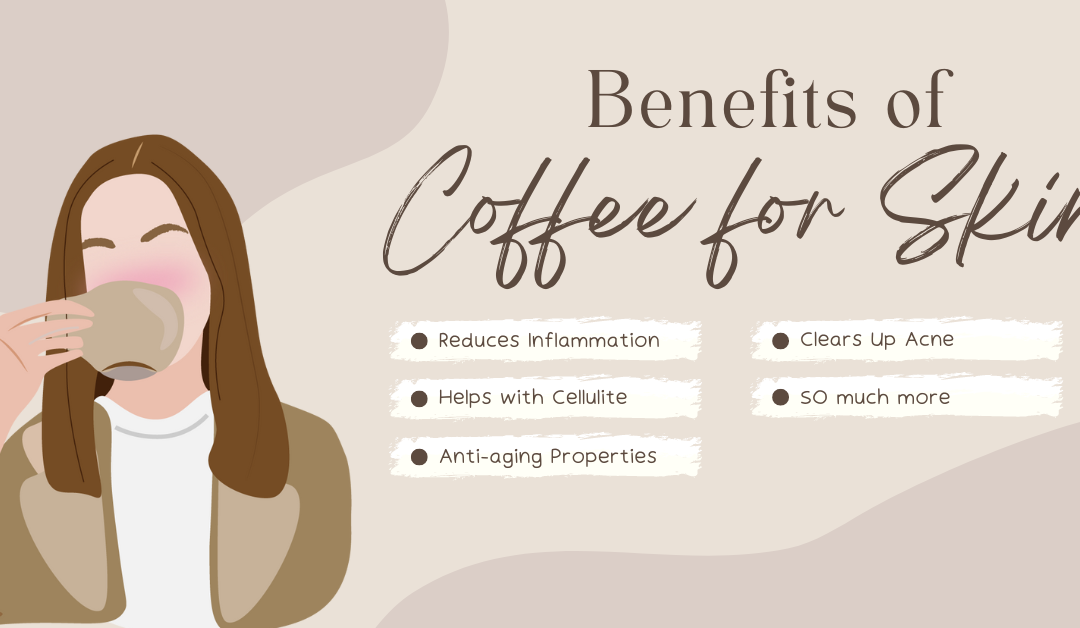
Yes and no. Many of the skin benefits that you’ll read about are not because you’re drinking this type of coffee. Instead, your morning cup of regular coffee offers a ton of skin benefits, such as:
Reduce acne
Lower inflammation
Protects the skin from UV-damage
Improves wound healing thanks to linoleic acid
Potentially reduces cellulite
Reduces under-eye inflammation
And most of these benefits are actually due to the chlorogenic acids and caffeine in the coffee.
If you’re upset that bulletproof coffee benefits for skin aren’t really a “thing,” you’ll want to read through our extensive article on coffee benefits for the skin. Many of these benefits are exactly what you’ll experience with bulletproof coffee, too.
P.S. there are also coffee benefits for hair that will have your hair looking its best in no time.
Wrapping Up: Benefits of Bulletproof Coffee
If you’re into creamy coffee drinks, there’s no harm in experimenting with bulletproof coffee benefits for yourself. People on the keto diet find that this type of coffee is a good substitute for breakfast and is worth drinking alongside regular coffee.
You can use the basic recipe above to experience the health benefits of bulletproof coffee, or you can find companies willing to sell it to you premade.
But for me, I prefer making my own because it’s cheaper and I know exactly what I’m putting in it.
Do you wake up every day, put on the coffee pot, get ready and then wonder if you even sleep at night? If so, you’re not alone. Life is a struggle, and no one really teaches you how to feel well rested or stresses the importance of getting enough sleep per night.
Well, that’s going to change today.
I’m not a sleep specialist, but I’ve done a ton of research on quality sleep and restorative sleep that I want to share with you. Instead of giving you a list of sleep tips to follow, I recommend following the steps outlined below because they’ve been crucial in my own daily routine to feel well rested in the morning.
9 Steps on How to Feel Well Rested
1. Set and Stick to a Sleep Schedule
If you want to feel well rested in the morning, the first step is to set and stick to a sleep schedule. Setting a sleep schedule means going to bed and waking up at the same time every day – even on weekends.
When you follow a consistent sleep schedule, your body will naturally be tired and ready for bed when the time comes. Your body will also wake up naturally at the same time.
Consistency is key. If you’re following a schedule, you can be sure that you’re getting enough sleep most (if not all) days of the week. When you don’t follow a schedule, you may get to bed late one or two nights a week, which can throw off your entire rhythm.
2. Exercise During the Day
Want to know how to sleep less and still feel well rested? Get better sleep. The link at the start of the paragraph is a great place to start learning about sleep quality and the different types of sleep you’ll experience.
But without getting too technical, exercise during the day to sleep better at night.
Why?
A review of 29 studies found that exercise improves both sleep duration and quality
Four studies in the review found no impact of exercise on sleep
One study found exercise negatively impacted sleep
So, the majority of studies found that exercise improves restful sleep and will help you feel well rested.
What happened in the other studies?
We can’t say with 100% certainty what happened with the other studies, but it’s very possible that participants did one of the following:
Exercised too close to bedtime and had a jolt of energy after (don’t exercise if you have three hours or less before your head hits the pillow)
Regular exercise wasn’t intense enough to promote better, deep sleep
Exercise is great for promoting sleep – in my experience. If you engage in intense endurance workouts, they can also make you sleep better. However, if you’re just “there” in the gym and not really pushing yourself, you might not notice a difference in how rested you feel the next morning.
3. Start Going Outside for 30+ Minutes a Day
Want to know how to feel well rested? Go outside. This may sound like “hocus pocus” to some or a crazy natural promotion, but it’s not. In fact, a study was done on increasing daylight exposure and sleep.
Participants in this study were office workers behind EC glass.
But, many experts recommend just going outdoors for about 30 minutes a day. Read a book. Exercise. Or just do something outside that you want to do.
Why?
The study found:
Optimizing daylight led to better overall sleep
Light exposure increased cognitive assessments by 42%
The CDC also recommends that you spend 30 minutes a day outside. Why? If you expose yourself to natural light, it will strengthen your biological rhythms. These rhythms will help you sleep better at night and feel more awake and energized during the day.
4. Establish a Bedtime Routine
Routines seem to help with everything. If you want to feel well rested, create a sleep routine. The issue that many people have, and this is definitely true for myself, is that I try cheating the system.
My ideal sleep routine looks something like this:
Go to sleep at 11
Wake up at 6 – 6:30
But when I finish work late or binge-watch television, I’ll stay up to 12 or 1 and still try to get up by 6:30. The first day, I might feel great, but I’ll eventually begin to feel tired and worn out.
You need to get a certain number of hours of sleep, often 7 – 8, for most people reading this article. Set a sleep schedule that you can follow every day and just stick to it. Within a week or two, you’ll realize that you knew how to feel well rested the entire time: sleep enough.
5. Incorporate Relaxation Techniques Into Your Nightly Routine
Some people are always going. You know, the people that clean the house, walk the dog, put the kids to bed, work on their degree and then plop into bed just thinking about what they’re going to do in the morning.
If you’re like this, drink a glass of wine and create a relaxation routine to actually get tired.
Sleep architecture is important, and if you want to stop having a poor sleep and feeling exhausted in the morning, be sure to incorporate relaxation techniques before bed.
6. Don’t Eat a Big Meal Before Bed
If you want to wind down for the night, don’t eat a big meal. Certain foods will keep you awake at night. Instead, try not having a big meal before bed unless you know that the meal won’t keep you awake.
For example, if I eat a big bowl of pasta, it’s almost a guarantee that I’ll fall asleep very fast.
But, in general, try not eating within 2 – 3 hours before bed.
7. Avoid Caffeine and Naps in the Afternoon
If you can, avoid drinking caffeine after late afternoon or early evening. Caffeine takes 3 – 5 hours to half leave the body. The remaining 50% of the caffeine may remain in the body for a lot longer.
8. Change Your Space to Promote a Good Night’s Sleep
Now that you’re not drinking your caffeinated hot or cold brew coffee, it’s time to focus on your space. A few of the changes that you can make in your space to promote sleep are:
Eliminate light – blackout curtains work well
Keep the room at 60 – 67 degrees Fahrenheit
Eliminate noise
You really just need to block outside light, even if this means wearing a sleep mask, putting on a white noise machine and lowering your body temperature by keeping the room cool.
9. Make Sure You Don’t Have a Sleep Disorder
Sleep disorders may not seem common, but when you look through the symptoms outlined by the CDC, there are quite a few that you may have. If you’re trying to learn how to feel well rested, go through these symptoms and check any that you’re experiencing:
You take 30 minutes or more to fall asleep
You wake up earlier than you should in the morning
You sleep 7 – 8+ hours a night and don’t feel rested
When you wake up, you feel like it’s difficult to move
You use stimulants to stay awake during the day
Your arms or legs jerk when you sleep
When you sleep, you snore loudly or make a choking sound, often attributed to sleep apnea
Sometimes, you have sudden muscle weakness when you laugh or get angry
If given a chance to nap, you fall asleep within 5 minutes
Of course, these are just some of the symptoms of a sleep disorder that you should be concerned about. A doctor’s checkup will help verify if you have a disorder or if you need to change up your bedtime routine.
Final Thoughts
If you’re struggling to feel well rested in the morning, even after a good night’s sleep, consider talking to your doctor. Sleep disorders are very real and may be the culprit holding you back from feeling well rested.
Now that you know how to feel well rested when you wake up, it’s time to go through each of these steps and see how they work for you.
Often, small tweaks to your sleeping habits can make you feel so much better.
Coffee is something that we love to write about because we drink a lot of it. And with any habit, you always want to learn more about it and how it impacts you. After writing about coffee scrub benefits for skin, we got to thinking: are there any coffee benefits for skin that don’t require a scrub?
And there are.
In fact, you’ll want to pour yourself a delicious cup of coffee before sitting down to read this article.
6 Coffee Benefits for Skin No One Ever Told You About
Skin health is important. Everyone wants to look young and beautiful forever. However, even going out in the sun can cause sun damage that impacts your skin. The good news is that a few cups of coffee can do a world of good for your skin.
1. Say Good-bye to Puffy Eyes and Inflammation
A lot of people drink coffee because it can reduce inflammation. One of the green coffee benefits for skin that is often promoted is “anti-inflammatory properties.” But, the truth is that your regular coffee also has these anti-inflammatory benefits.
The secret is in the chlorogenic acid in the coffee, along with melanoidins.
Researchers in Japan found that women that drank coffee saw a reduction in pigmented spots. When consumed, this means that coffee may help with:
Overall inflammation
Puffy eyes
More
Coffee masks or a facial scrub work really well for puffy eyes. If you use coffee grounds for a scrub, be sure to use circular motions when applying to maximize the coffee benefits for skin puffiness.
2. Reduce Cellulite – Seriously
Cellulite is the one benefit of coffee for your skin that will blow you away. Researchers believe that the caffeine content in coffee will:
Dilate blood vessels
Improve blood flow
When your blood flow improves in areas where you have cellulite, it will lead to a decrease in the appearance of cellulite. Of course, if you apply a scrub, these benefits improve even further.
3. Anti-aging Properties
Again, no one wants to age. If you drink coffee, you can help stop the clock from ticking, according to one study. The study found that coffee offered numerous benefits that aid in anti-aging, including:
Reduction in fine lines
Decrease in sunspots
Reduction in redness
In addition, one of the coffee benefits for skin in the study that is most impressive is that it helped decrease photoaging – a major perk.
4. Clear Up Acne
As many as 50 million people in the US alone suffer from acne. This means 1-in-6 or 1-in-7 people have some form of acne. A primary culprit is the population’s large consumption of non-low sugar drinks.
Coffee benefits for skin infections cannot be underestimated.
Why?
Coffee contains CGAs, which are often promoted for their high anti-inflammatory properties. However, CGAs are also great for fighting acne because they have antibacterial properties. Drinking coffee will provide some of these benefits, but you’ll also want to make use of your coffee grounds and make a scrub.
The grounds will allow for direct acne-fighting power while exfoliating the skin
5. Blast Away Those Dark Circles Under Your Eyes
Dark circles under your eyes are not flattering, but coffee comes to the rescue here, too. You’ll want to make your own scrub or a coffee face mask for this benefit. When applied to the area, coffee will improve blood circulation and cause your blood vessels to dilate.
Why is this important?
Dark circles under the eyes are thought to be caused by a lack of blood vessel dilation. Caffeine in the coffee grounds will promote the dilation process, eliminating the dark under eye circles. A basic recipe for a scrub that will work perfectly for this application, includes:
Mix olive oil and coffee grounds together. You’ll want to use about ½ tsp of each will do the trick.
Add in a very small amount of water.
Mix the ingredients into a paste-like consistency.
Apply under the eyes, ensuring that you don’t allow the mixture to get in the eyes.
Let sit for 10 minutes.
Rinse off.
You can repeat this routine as often as you need until you achieve the results that you desire.
6. Reduce Swelling in the Feet
Swollen feet are common. Stand too much or sit too much, and your circulation will be negatively impacted, leading to swollen feet and ankles. One way to reduce the swelling is to create your own coffee foot bath.
Brew up a pot of coffee
Allow the coffee to cool and place in a foot basin
Soak your feet in the coffee
You can also add in the ground beans to help exfoliate your feet while you’re at it. The grounds will work like a scrub to rip off the dead skin cells. However, it can be quite messy when taking your foot out of the bath. If you do add grounds, be sure to place the basin in the tub when soaking so that you can easily wash the grounds away.
The circulation benefits we discussed earlier will help you improve circulation to your feet, allowing your body to move and expel the water in your feet.
You can obviously enjoy the benefits of black coffee for skin using this method. If you have old coffee grounds that you want to get rid of or a type of coffee you don’t like, you can make sure that it won’t go to waste by making your own foot bath.
And, if you want to take these benefits even further, coffee scrubs and coffee face masks can help you remove dead skin cells to improve your skin further.
How Soon Can You See Benefits for Skin from Drinking Coffee?
While we saw a lot of people asking this question, we couldn’t find a concrete answer. Every skin condition is different, and since many require topical application through a scrub or mask, it’s really too difficult to give you an accurate answer.
Many people that use scrubs or masks will notice a difference in their skin’s appearance after just a few applications.
Wrapping Up: What Are the Benefits of Coffee for Skin?
As you’ve seen, drinking coffee can be really good for your skin. Of course, applying coffee grounds to the skin or using an exfoliator will also provide great benefits.
In fact, why not brew a cup of coffee and use the grinds to make your own coffee scrub for a double whammy of benefits?
Pregnancy takes your body on a wild ride. Your hormones are all over the place, and your body is going through so many changes every day. After all, it takes a lot of hard work and effort to grow a human. But there’s one thing that you may not have been prepared for: poor sleep. If you’re looking for tips on how to sleep better when pregnant, we have you covered.
But first, let’s talk about how much sleep you really need when you’re pregnant.
How Many Hours Should a Pregnant Woman Sleep?
When you’re pregnant, you’re not only eating for two, but you’re also sleeping for two. But how much sleep is enough?
Generally, you should aim for 8-10 hours of sleep during pregnancy. While it may be challenging to reach that goal, it’s important to try.
Inadequate sleep can cause problems down the road. One study found that pregnant people who got less than six hours of sleep were 4.5 times more likely to need a C-section. Their labor was also 10 hours or longer compared to those who got 7 or more hours of sleep.
As important as it may be, anyone who’s been pregnant will tell you that it’s not always easy to get a restful night of sleep.
To help you get a full night of sleep, we’re going to share some helpful tips on how to get better sleep when pregnant.
How To Get Better Sleep When Pregnant
Getting enough sleep in pregnancy can be challenging, especially during the first and third trimesters. Many people experience insomnia in early pregnancy, and in the third trimester, finding a comfortable position can be difficult (not to mention all of the middle-of-the-night bathroom breaks!).
It’s important to talk to your doctor about your disturbed sleep, but we’re going to share some tips that you can use to get more ZZZs now.
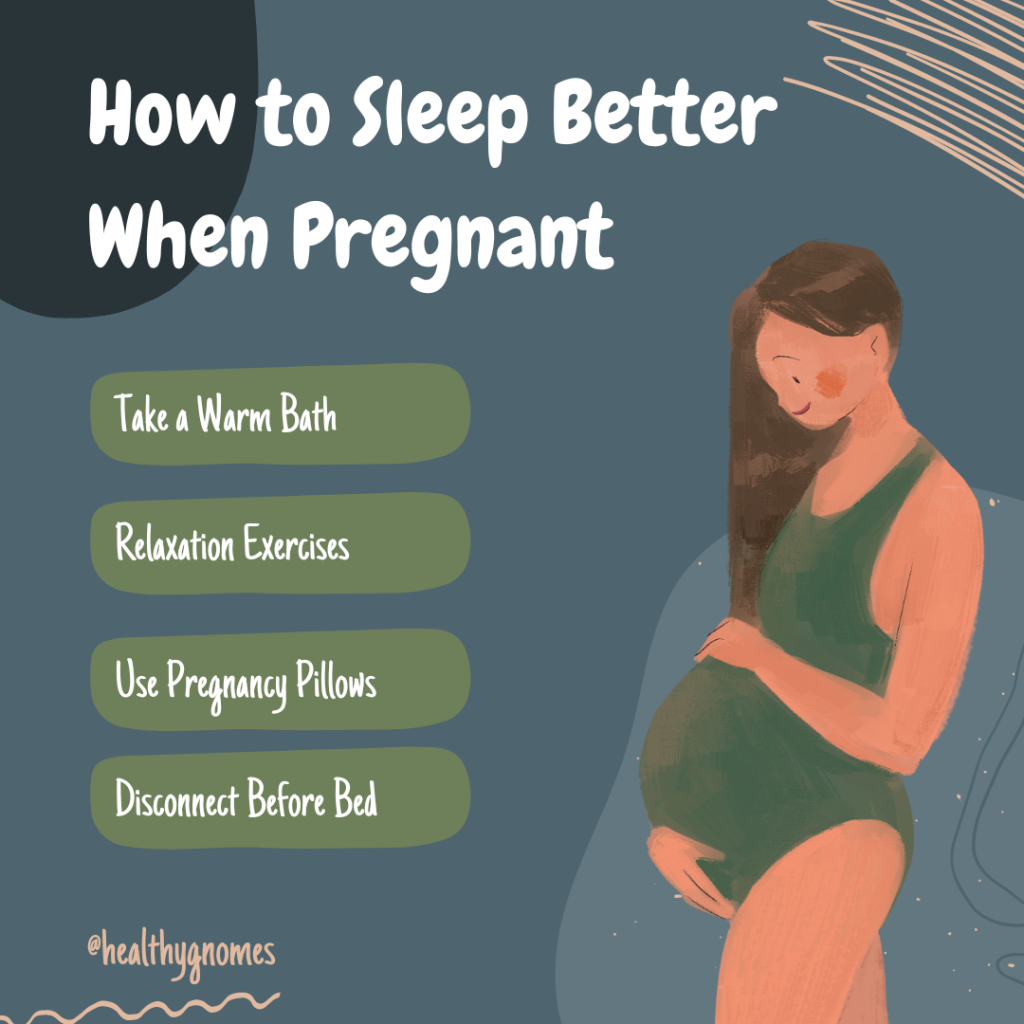
Take a Warm Bath
A little relaxation can go a long way in helping you get to sleep and stay asleep. Taking a warm bath before bed can help melt away stress and get into that sleep state of mind.
It’s important to stress the word “warm” here. Baths are generally fine to take during pregnancy as long as the water isn’t too hot (over 100 degrees Fahrenheit). You don’t want to soak in water that will raise your body temperature to above 102.2 degrees Fahrenheit, or 39 degrees Celsius.
So, stick to warm (not overly hot) baths. Play some soothing music, and just relax. If you have the time, try a guided meditation to calm your mind and body before bed.
Practice Relaxation Exercises
There’s so much going on during pregnancy that it can be difficult to relax. You’re excited about the future, but maybe you also have some anxiety about labor. Worries, fears and hormonal changes can make it harder to sleep.
If your mind is all over the place and it’s making it hard to sleep, there are relaxation techniques you can try to get your body and mind ready for bed.
Try these breathing exercises to help calm your mind and get your body into a relaxed state:
Inhale slowly, pause and exhale slowly. Focus on controlling your breath and the way it feels to breathe in and out.
As you inhale, feel your ribs expanding and your lungs filling.
As you exhale, feel your lungs emptying and your naval pushing in towards your spine.
Repeat for as long as you need or have time for.
Make sure that you’re inhaling and exhaling slowly. Taking quick deep breaths can cause you to hyperventilate.
To set the mood, try lighting an unscented candle and playing soothing music. Or just sit in peace and silence while breathing.
Practice relaxation techniques every evening before bed to help you get into a more relaxed state.
Try a Different Sleep Position
As you reach the third trimester, finding a comfortable position can be tricky. Experts recommend staying off of your back, especially during the third trimester. As the baby grows and your uterus becomes heavier, it can press down on the nerves in your spine as well as the major vein that transports blood from the lower body to the heart.
According to the National Sleep Foundation, pregnant people should sleep on their left side. Sleeping in this position can help improve the flow of blood and nutrients to both the baby and to your heart and kidneys.
But if you have an especially active baby at night, you may need to change positions every so often.
During the first trimester, it’s safe to sleep in any position you like because your uterus is still so small that it shouldn’t interrupt your sleep patterns.
Use Pregnancy Pillows
If you’re having sleepless nights because you can’t get comfortable, pillows may help.
Invest in some extra pillows and place them:
Between your knees
Behind your back for support and pain relief
Under your baby bump
You can use a regular pillow in each of these spots.
Of course, you can also use a body pillow that’s made for pregnancy. These U-shaped pillows make it easy and comfortable to sleep on your side because they cradle you. They wrap around your body to provide support for your back, and you can place the bottom of the pillow between your knees for added hip support.
There are other types of pregnancy pillow shapes, too, like wedges and waist pillows. Find the shape that works best for your body type and comfort level.
Work on Your Sleep Hygiene
Practicing good sleep hygiene is also important during pregnancy. Creating the right environment and mindset is key. Here are some tips to improve your sleep hygiene:
Keep the room cool and dark at night. Blackout curtains or sleeping masks can help block out light. The ideal room temperature for sleeping, according to experts, is about 65 degrees Fahrenheit.
Set a consistent bedtime and prioritize sleep. Remember that you need about 8-10 hours of sleep per day, so make it a point to go to bed earlier.
Take naps earlier in the day so that they don’t interfere with your nighttime sleep.
Do something relaxing before bed, like read a book, take a bath or practice deep breathing.
Avoid eating spicy foods or anything too heavy before bed to reduce the risk of acid reflux.
Exercise regularly (with the okay of your doctor) and earlier in the day.
Drink plenty of water during the day, but cut back in the evening to minimize bathroom trips.
The most important thing is to be consistent. Create an environment that promotes restful sleep and prioritize rest. Your body is hard at work creating new life, and that takes a lot of energy. So, give your body the much-deserved rest it needs to work its magic.
Eat Bland Snacks
A nighttime snack may help you get to sleep more quickly. But it’s important to make sure that you’re eating the right foods.
Try eating bland snacks and avoid sugary food before bed. It’s also best to avoid snacks that are spicy, fried or caffeinated.
Here are some great before-bed snack ideas:
A light snack of wheat crackers, low-fat cheese and a few pieces of fruit
Low-fat yogurt with toast
Oatmeal or soup
If you’re dealing with morning sickness, bland snacks are ideal. Make sure that your snacks really are snack-sized. Eating too big of a meal before bed may cause indigestion or make it harder to get comfortable and fall asleep.
Disconnect Hours Before Bedtime
One of the best things you can do to improve sleep during pregnancy is to disconnect from your phone and other screens.
Smartphones and computer screens emit blue light, which makes it harder for your body to get ready for sleep. Blue light actually blocks melatonin, the hormone that makes you feel sleepy and regulates your circadian rhythm.
Plus, the bright light from phones and TV screens makes it harder to get into that relaxed state for sleep.
You don’t have to disconnect for the entire evening. Just aim to stop using electronic devices about 30 minutes before bed.
Final Thoughts
Use these tips on how to get better sleep during pregnancy and enjoy more hours of sleep. It’s important to remember that you’re sleeping for two. Lack of sleep will not only affect your mental health but will also affect the health of the baby.
Make sure that you’re getting enough rest at night, and if you’re really struggling with your sleep schedule, talk to your doctor about using a safe sleep aid.
Millions of people around the world start their days with a cup of coffee. It’s one of the most popular drinks in the world, and it offers a surprising number of benefits for your health. But did you know there are coffee benefits for hair, too?
Here are some great reasons to add coffee to your hair care routine and how to do it.
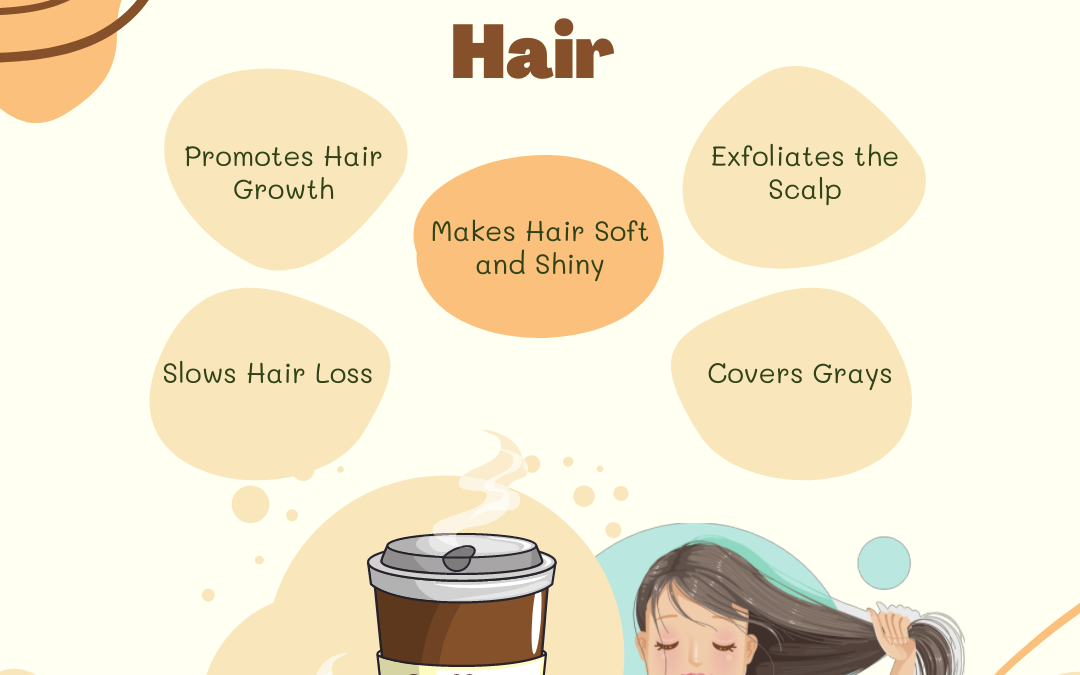
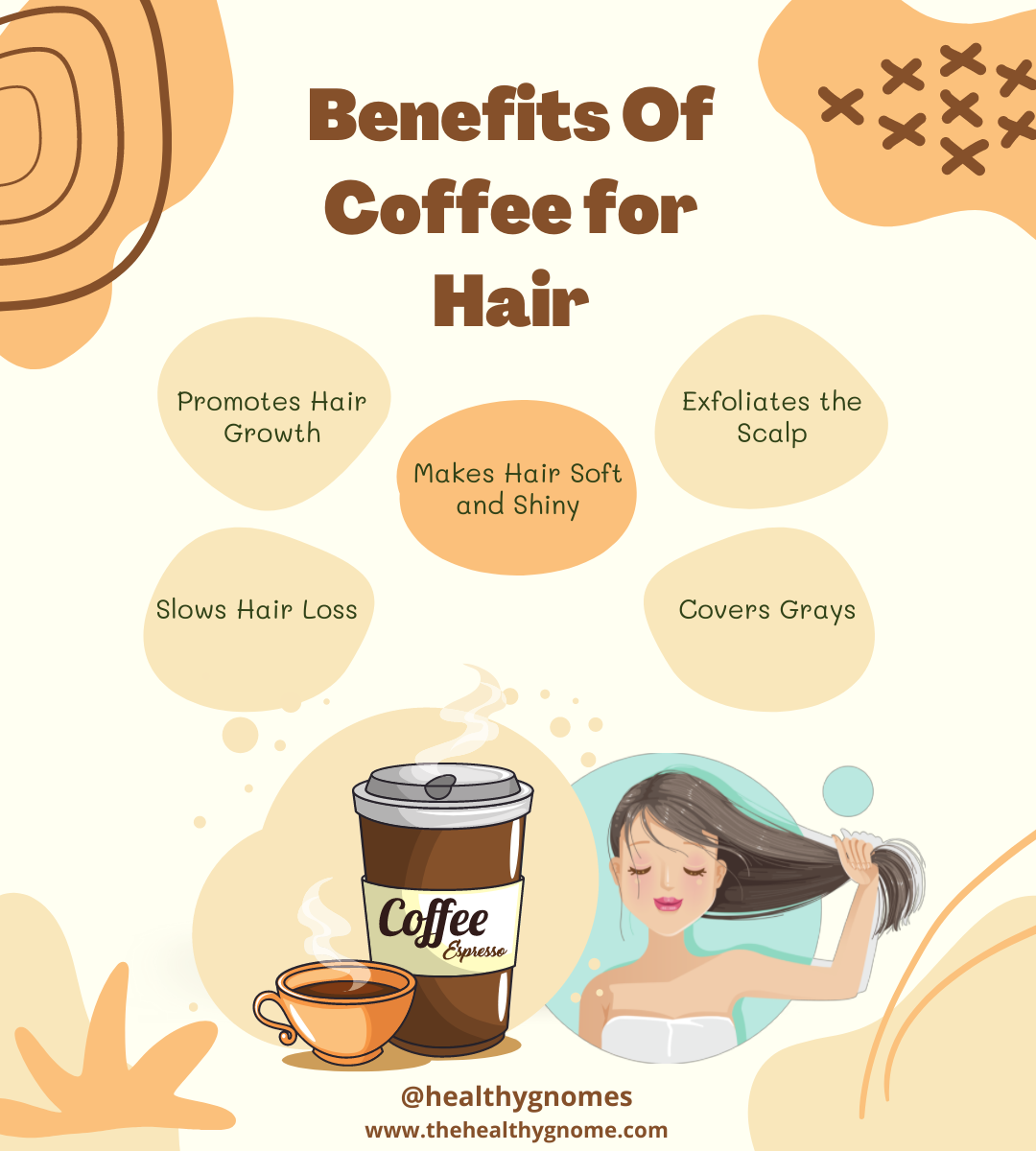
The Surprising Coffee Benefits for Hair
So, what are the benefits of coffee for hair? Why should you add this world-famous drink to your hair care routine?
Have you always dreamed of having long, luscious locks? Coffee may help you reach that goal and improve hair health. It can even help stop hair loss, too.
Research has found that the caffeine in coffee is what helps stimulate hair growth, stops hair loss and helps improve hair health. How?
Caffeine helps block DHT in men’s hair follicles
It helps elongate the hair shaft to create wider, longer hair roots
It extended anagen duration (the hair growth stage)
It has a growth-promoting effect on female hair follicles, too
Caffeine is a stimulant, which means that it can also help boost circulation to the scalp and hair follicles. Improved blood flow to the scalp can help your hair grow faster and make it stronger, too. The end result? Thicker, fuller-looking hair.
2. Exfoliates Your Scalp
You’ve heard of using coffee grinds to exfoliate your skin. A natural coffee scrub can buff away dead skin cells and help improve circulation.
But you can also use coffee scrubs on your scalp for the same effect. Exfoliation is so good for the skin, but we often neglect our scalps.
A simple coffee scrub made of old coffee grinds – and nothing else – can help:
Get rid of dead skin cells on your scalp
Promote blood flow to your hair follicles
Leave your scalp feeling refreshed and rejuvenated
Just a word of warning, though – this scrub can get messy! Make sure that you rinse several times and don’t forget to shampoo. If you have a scalp massager brush for the shower, use it – it will help get the grinds out of your hair.
Try using cold water to rinse to help seal the cuticle before you style.
3. Makes Your Hair Softer and Shinier
If your hair is dull and brittle, coffee may bring it back to life. A simple coffee rinse can make your hair softer and smoother. It can give you shiny locks, too.
The caffeine in coffee won’t strip your hair of its natural oils. In fact, it has the opposite effect. Coffee can help your hair retain moisture and leave a natural sheen.
Of course, all of that extra blood flow to the scalp will feed your hair more nutrients and oxygen for overall healthier hair.
The flavonoids (i.e., antioxidants) in coffee can help promote hair regeneration. And the hair-smoothing properties of coffee can even help tame frizz. So, give coffee rinses a try if you have curly hair and struggle with frizz and detangling.
4. Kick Grays to the Curb
Did you know that coffee acts as a natural hair stain? Regular coffee rinses can help cover up grays to leave your hair looking youthful and resilient.
Of course, this trick really only works with dark hair. For best results, use a dark roast coffee or espresso. Their rich colors will have a more dramatic effect on your hair color.
Green Coffee Benefits for Hair
When most people talk about using coffee in their hair or skin routines, they usually refer to using roasted coffee beans. But what about green coffee? Are there any green coffee benefits for hair?
Yes! Green coffee’s antioxidants help fight free radicals and keep your hair looking and feeling its best.
And green coffee oil has antimicrobial properties that can detox your scalp while:
Reducing itchiness
Preventing dandruff
Promoting hair growth
Why is green coffee oil so great for your hair? It’s loaded with:
Essential fatty acids
Vitamin E
Its moisturizing properties can help keep your hair soft, smooth and hydrated. Just make sure that you use a high-quality green coffee oil.
What About Coffee Oil Benefits for Hair?
We talked a little bit about green coffee oil benefits, but what about regular coffee oil? Coffee oil does have many benefits for your hair, and the convenient oil form makes it so easy to apply.
Here’s what coffee oil can do for your hair:
Promote hair growth and stop hair loss (thanks, caffeine!)
Seal in moisture for hydrated, shiny hair
Smooths and tames frizz
Softens and prevents split ends
Balance scalp pH
You can find coffee oil products online that are meant for hair (they’re sometimes called “coffee seed oil”). For scalp treatments, look for products that come in squeezable bottles with nozzles. These bottles make it easier to apply the oil directly to your scalp and roots.
You can also apply coffee oil to damp hair before styling to moisturize and protect your hair. Take care to only use a small amount. A little goes a long way with coffee oil – or any oil for that matter. Just a few drops will help tame frizz and seal in moisture.
Drinking Coffee Benefits for Hair
You know that applying coffee to your hair and scalp has benefits, but what about drinking it? Can your morning cup of java also make your hair look healthy and beautiful? Yes.
Coffee is rich in antioxidants. For many people, coffee is their primary source of antioxidants in their diets.
All of those antioxidants help improve hair growth by helping maintain collagen in both the body and the connective tissues of your hair follicles. They also help protect scalp cells in your blood vessels to encourage healthy hair growth.
So, when you drink coffee, you’re helping improve your hair from the inside out.
Final Thoughts
As it turns out, drinking coffee is good not only for your soul – and sanity – but for your hair, too. Use the tips above to incorporate coffee into your hair care routine and enjoy yet another excuse to enjoy your morning cups of coffee.



 Sleep disorders may not seem common, but when you look through the symptoms outlined by the