Changing out your morning coffee for something new doesn’t happen often. I mean: would you stop drinking coffee? I wouldn’t. But I am not opposed to trying something new, especially if it’s good for me. Bulletproof coffee is the new “hot” drink, and it actually tastes pretty good.
We’re going to look at bulletproof coffee benefits, explain why you may want to start drinking it and see if this drink is worth drinking instead of your morning brew.
But before we start, what the heck is bulletproof coffee?
What the Heck is Bulletproof Coffee?
If you’re envisioning coffee beans with a Kevlar vest on, you’re way off. Instead, bulletproof coffee is part of a diet, and the goal is to drink this coffee rather than eat your traditional, carb-filled breakfast.
This coffee consists of:
High-quality coffee beans
Unsalted butter
Coconut oil (or a medium chain triglyceride)
You brew up the coffee like normal, blend up the ingredients really well and end with a brew that is rather similar to a latte and really creamy.
It’s very important that you focus on quality ingredients when making your cup of coffee. You’ll want to focus on:
Organic, grass-fed butter
Good quality coconut oil
You won’t be adding any milk, so you’ll be drinking a black coffee, although you won’t notice it with the coconut oil and grass-fed butter mixed in.
Now that we’ve defined bulletproof coffee for you, let’s answer an important question: What are the benefits of bulletproof coffee?
Let’s find out.
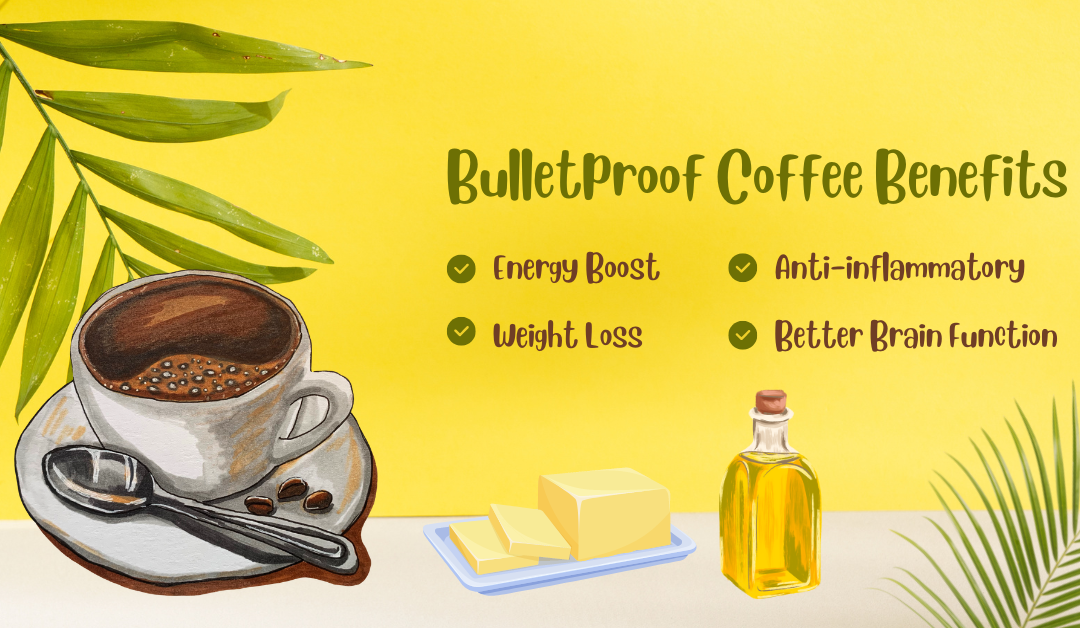
4 Must-Read Bulletproof Coffee Benefits
1. Energy Boost Instead of a Crash
In the morning, most people eat breakfast foods that cause them to crash. A regular diet may consist of:
Pancakes
French toast
English muffins
Pop tarts
Cereal
And in the morning, everyone seems to be in a rush, so they’ll grab the absolute fastest thing to eat. No one is thinking about a balanced diet or their digestive health when they’re rushing off to work.
One of the most important bulletproof coffee health benefits is that you’ll feel filled with energy for longer. You don’t have to worry about feeling very energetic after eating only to experience a blood sugar crash shortly after.
As an alternative to breakfast, bulletproof coffee is rather impressive.
Of course, you get the jolt of energy from coffee, but research shows that the real energy booster comes from the omega-3 and omega-6 fats that:
Slow metabolism of the butter
Cause you to hold onto energy
Naturally protect against crashing
MCT oil also aids in energy retention and the boosting effects of bulletproof coffee. MCTs are metabolized quickly for energy, while butter will work to help you maintain energy stores. Without the carbs and sugar, you won’t experience the immediate energy boost followed by the “did I even sleep” feeling 30 minutes later with bulletproof coffee.
2. Encourages Weight Loss
Most of the bulletproof coffee benefits that you’ll read about online deal with the keto diet. People that follow this diet need to have high fat in their diet, and they want to remain in a state of ketosis.
Reduces side effects experienced with keto (i.e., keto flu)
Anyone on a low-carb diet who wants to find something to eat for breakfast should consider coffee with butter or ghee and an MCT oil. You can even have it after your morning workout without worrying about carbs being stored as fat, like what would happen with other breakfast foods.
Keto works for a lot of people because it uses body fat for energy and can help them improve their body composition.
In short: bulletproof coffee is a good breakfast substitute.
3. Anti-inflammatory Properties
Bulletproof coffee benefits also include anti-inflammation. MCT oils have been shown in studies to have anti-inflammation properties. The omega-fatty acids in the grass-fed butter also lend their own anti-inflammatory effects to your morning brew.
Optimizing the anti-inflammatory properties requires you to be very cautious of the ingredients that you put in your coffee.
In the ideal world, you’ll purchase ingredients that include:
Organic coffee
Grass-fed butter
Following an anti-inflammatory diet is something that a lot of healthcare professionals recommend, and it’s something you’ll want to discuss with your doctor, too. Inflammation is linked to many diseases and chronic illnesses, so being able to reduce it will improve your odds of living a happier, healthier life.
4. Boost Brain Function
Coffee boosts your brain function on its own. Caffeine is a natural stimulant, and studies show that it can:
Promote short-term brain function
Enhance focus
Improve mood
Boost reaction time
Caffeine also helps to stimulate your central nervous system, which will enhance your mood by producing more serotonin and dopamine.
It’s really important to note that the brain-boosting benefits are associated with caffeinated coffee in general and not just bulletproof coffee. In fact, people drink coffee before exams because it makes them alert.
Studies even show that caffeine also improves alertness and is a great way to limit depression while also boosting mood. And the people who say “drink coffee and you’ll never sleep” are also misinformed. The truth is that coffee only disturbs sleep in certain very sensitive individuals.
If you’re concerned that you may be one of the individuals that are sensitive to caffeine, simply try to cut down your coffee consumption five or six hours before bed and see how you feel. Sleep is so crucial to your health that you may want to skip out on coffee if you can’t sleep well at night after drinking a cup.
Does Bulletproof Coffee Break a Fast?
Anyone dieting and following intermittent fasting (IF) may want to know: will bulletproof coffee break a fast?
And the answer is all over the place.
Naturally, people who push products for dieting say that bulletproof coffee and intermittent fasting work great together because it won’t break your fast. However, this is simply not the case because any caloric intake will break a fast.
When you fast, the body will enter autophagy, or a stage where it cleans up toxins in the body and repairs the body. However, a few points to note here are:
Bulletproof coffee breaks your fast
If you’re following the keto diet, this coffee is keto-friendly
So, to clarify, one of the bulletproof coffee benefits that are completely false is that drinking this creamy latte won’t break a fast. If you don’t want to break your fast and need an extra jolt of caffeine, you can drink completely black coffee.
Butter coffee or anything with added oils or sugars may fit into ketogenic diets and help you maintain your energy levels longer, but it will break your fast.
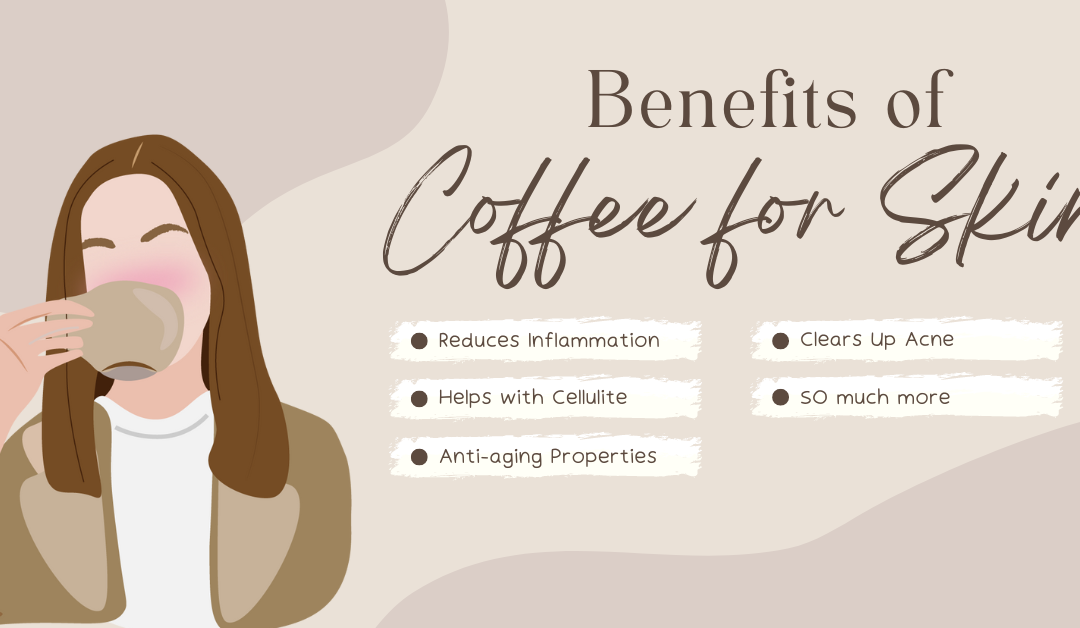
Are There Bulletproof Coffee Benefits for Skin?
Yes and no. Many of the skin benefits that you’ll read about are not because you’re drinking this type of coffee. Instead, your morning cup of regular coffee offers a ton of skin benefits, such as:
Reduce acne
Lower inflammation
Protects the skin from UV-damage
Improves wound healing thanks to linoleic acid
Potentially reduces cellulite
Reduces under-eye inflammation
And most of these benefits are actually due to the chlorogenic acids and caffeine in the coffee.
If you’re upset that bulletproof coffee benefits for skin aren’t really a “thing,” you’ll want to read through our extensive article on coffee benefits for the skin. Many of these benefits are exactly what you’ll experience with bulletproof coffee, too.
P.S. there are also coffee benefits for hair that will have your hair looking its best in no time.
Wrapping Up: Benefits of Bulletproof Coffee
If you’re into creamy coffee drinks, there’s no harm in experimenting with bulletproof coffee benefits for yourself. People on the keto diet find that this type of coffee is a good substitute for breakfast and is worth drinking alongside regular coffee.
You can use the basic recipe above to experience the health benefits of bulletproof coffee, or you can find companies willing to sell it to you premade.
But for me, I prefer making my own because it’s cheaper and I know exactly what I’m putting in it.
Coffee is something that we love to write about because we drink a lot of it. And with any habit, you always want to learn more about it and how it impacts you. After writing about coffee scrub benefits for skin, we got to thinking: are there any coffee benefits for skin that don’t require a scrub?
And there are.
In fact, you’ll want to pour yourself a delicious cup of coffee before sitting down to read this article.
6 Coffee Benefits for Skin No One Ever Told You About
Skin health is important. Everyone wants to look young and beautiful forever. However, even going out in the sun can cause sun damage that impacts your skin. The good news is that a few cups of coffee can do a world of good for your skin.
1. Say Good-bye to Puffy Eyes and Inflammation
A lot of people drink coffee because it can reduce inflammation. One of the green coffee benefits for skin that is often promoted is “anti-inflammatory properties.” But, the truth is that your regular coffee also has these anti-inflammatory benefits.
The secret is in the chlorogenic acid in the coffee, along with melanoidins.
Researchers in Japan found that women that drank coffee saw a reduction in pigmented spots. When consumed, this means that coffee may help with:
Overall inflammation
Puffy eyes
More
Coffee masks or a facial scrub work really well for puffy eyes. If you use coffee grounds for a scrub, be sure to use circular motions when applying to maximize the coffee benefits for skin puffiness.
2. Reduce Cellulite – Seriously
Cellulite is the one benefit of coffee for your skin that will blow you away. Researchers believe that the caffeine content in coffee will:
Dilate blood vessels
Improve blood flow
When your blood flow improves in areas where you have cellulite, it will lead to a decrease in the appearance of cellulite. Of course, if you apply a scrub, these benefits improve even further.
3. Anti-aging Properties
Again, no one wants to age. If you drink coffee, you can help stop the clock from ticking, according to one study. The study found that coffee offered numerous benefits that aid in anti-aging, including:
Reduction in fine lines
Decrease in sunspots
Reduction in redness
In addition, one of the coffee benefits for skin in the study that is most impressive is that it helped decrease photoaging – a major perk.
4. Clear Up Acne
As many as 50 million people in the US alone suffer from acne. This means 1-in-6 or 1-in-7 people have some form of acne. A primary culprit is the population’s large consumption of non-low sugar drinks.
Coffee benefits for skin infections cannot be underestimated.
Why?
Coffee contains CGAs, which are often promoted for their high anti-inflammatory properties. However, CGAs are also great for fighting acne because they have antibacterial properties. Drinking coffee will provide some of these benefits, but you’ll also want to make use of your coffee grounds and make a scrub.
The grounds will allow for direct acne-fighting power while exfoliating the skin
5. Blast Away Those Dark Circles Under Your Eyes
Dark circles under your eyes are not flattering, but coffee comes to the rescue here, too. You’ll want to make your own scrub or a coffee face mask for this benefit. When applied to the area, coffee will improve blood circulation and cause your blood vessels to dilate.
Why is this important?
Dark circles under the eyes are thought to be caused by a lack of blood vessel dilation. Caffeine in the coffee grounds will promote the dilation process, eliminating the dark under eye circles. A basic recipe for a scrub that will work perfectly for this application, includes:
Mix olive oil and coffee grounds together. You’ll want to use about ½ tsp of each will do the trick.
Add in a very small amount of water.
Mix the ingredients into a paste-like consistency.
Apply under the eyes, ensuring that you don’t allow the mixture to get in the eyes.
Let sit for 10 minutes.
Rinse off.
You can repeat this routine as often as you need until you achieve the results that you desire.
6. Reduce Swelling in the Feet
Swollen feet are common. Stand too much or sit too much, and your circulation will be negatively impacted, leading to swollen feet and ankles. One way to reduce the swelling is to create your own coffee foot bath.
Brew up a pot of coffee
Allow the coffee to cool and place in a foot basin
Soak your feet in the coffee
You can also add in the ground beans to help exfoliate your feet while you’re at it. The grounds will work like a scrub to rip off the dead skin cells. However, it can be quite messy when taking your foot out of the bath. If you do add grounds, be sure to place the basin in the tub when soaking so that you can easily wash the grounds away.
The circulation benefits we discussed earlier will help you improve circulation to your feet, allowing your body to move and expel the water in your feet.
You can obviously enjoy the benefits of black coffee for skin using this method. If you have old coffee grounds that you want to get rid of or a type of coffee you don’t like, you can make sure that it won’t go to waste by making your own foot bath.
And, if you want to take these benefits even further, coffee scrubs and coffee face masks can help you remove dead skin cells to improve your skin further.
How Soon Can You See Benefits for Skin from Drinking Coffee?
While we saw a lot of people asking this question, we couldn’t find a concrete answer. Every skin condition is different, and since many require topical application through a scrub or mask, it’s really too difficult to give you an accurate answer.
Many people that use scrubs or masks will notice a difference in their skin’s appearance after just a few applications.
Wrapping Up: What Are the Benefits of Coffee for Skin?
As you’ve seen, drinking coffee can be really good for your skin. Of course, applying coffee grounds to the skin or using an exfoliator will also provide great benefits.
In fact, why not brew a cup of coffee and use the grinds to make your own coffee scrub for a double whammy of benefits?
Pregnancy takes your body on a wild ride. Your hormones are all over the place, and your body is going through so many changes every day. After all, it takes a lot of hard work and effort to grow a human. But there’s one thing that you may not have been prepared for: poor sleep. If you’re looking for tips on how to sleep better when pregnant, we have you covered.
But first, let’s talk about how much sleep you really need when you’re pregnant.
How Many Hours Should a Pregnant Woman Sleep?
When you’re pregnant, you’re not only eating for two, but you’re also sleeping for two. But how much sleep is enough?
Generally, you should aim for 8-10 hours of sleep during pregnancy. While it may be challenging to reach that goal, it’s important to try.
Inadequate sleep can cause problems down the road. One study found that pregnant people who got less than six hours of sleep were 4.5 times more likely to need a C-section. Their labor was also 10 hours or longer compared to those who got 7 or more hours of sleep.
As important as it may be, anyone who’s been pregnant will tell you that it’s not always easy to get a restful night of sleep.
To help you get a full night of sleep, we’re going to share some helpful tips on how to get better sleep when pregnant.
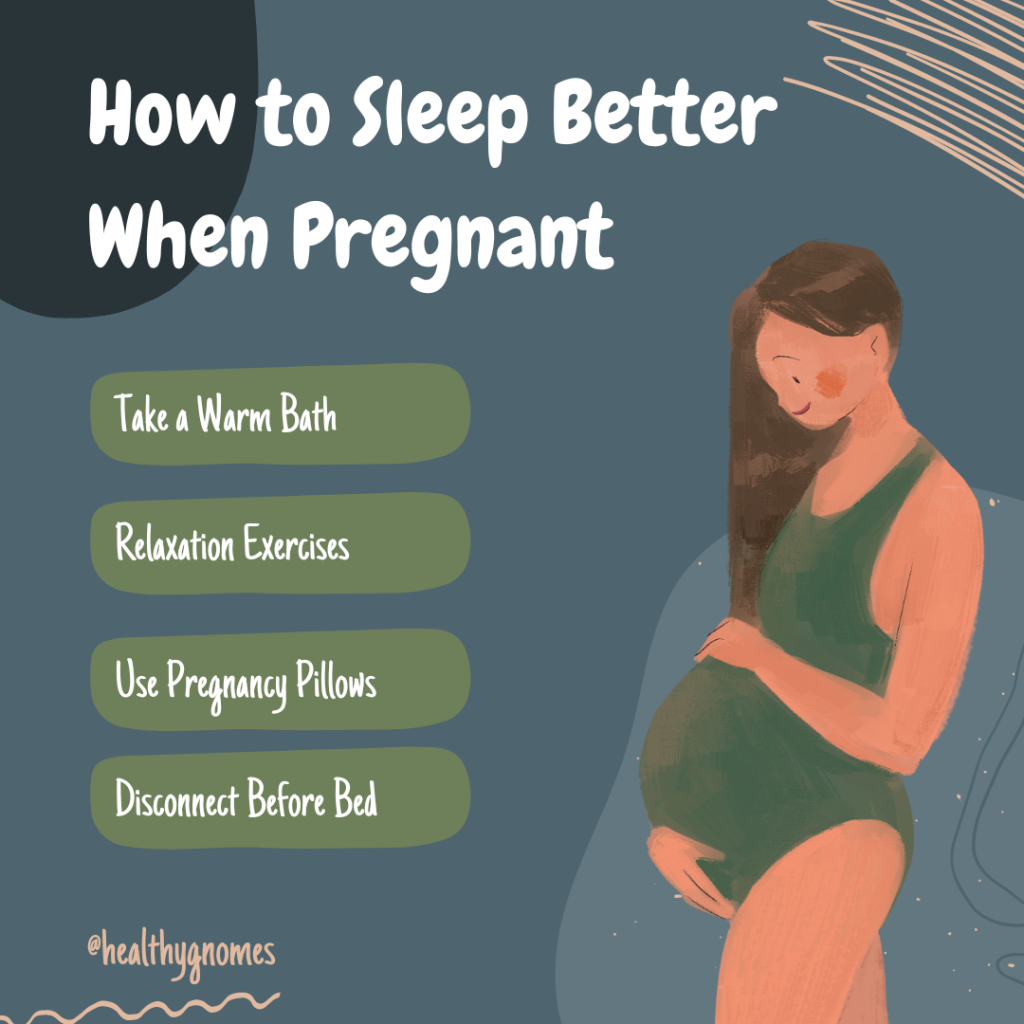
How To Get Better Sleep When Pregnant
Getting enough sleep in pregnancy can be challenging, especially during the first and third trimesters. Many people experience insomnia in early pregnancy, and in the third trimester, finding a comfortable position can be difficult (not to mention all of the middle-of-the-night bathroom breaks!).
It’s important to talk to your doctor about your disturbed sleep, but we’re going to share some tips that you can use to get more ZZZs now.
Take a Warm Bath
A little relaxation can go a long way in helping you get to sleep and stay asleep. Taking a warm bath before bed can help melt away stress and get into that sleep state of mind.
It’s important to stress the word “warm” here. Baths are generally fine to take during pregnancy as long as the water isn’t too hot (over 100 degrees Fahrenheit). You don’t want to soak in water that will raise your body temperature to above 102.2 degrees Fahrenheit, or 39 degrees Celsius.
So, stick to warm (not overly hot) baths. Play some soothing music, and just relax. If you have the time, try a guided meditation to calm your mind and body before bed.
Practice Relaxation Exercises
There’s so much going on during pregnancy that it can be difficult to relax. You’re excited about the future, but maybe you also have some anxiety about labor. Worries, fears and hormonal changes can make it harder to sleep.
If your mind is all over the place and it’s making it hard to sleep, there are relaxation techniques you can try to get your body and mind ready for bed.
Try these breathing exercises to help calm your mind and get your body into a relaxed state:
Inhale slowly, pause and exhale slowly. Focus on controlling your breath and the way it feels to breathe in and out.
As you inhale, feel your ribs expanding and your lungs filling.
As you exhale, feel your lungs emptying and your naval pushing in towards your spine.
Repeat for as long as you need or have time for.
Make sure that you’re inhaling and exhaling slowly. Taking quick deep breaths can cause you to hyperventilate.
To set the mood, try lighting an unscented candle and playing soothing music. Or just sit in peace and silence while breathing.
Practice relaxation techniques every evening before bed to help you get into a more relaxed state.
Try a Different Sleep Position
As you reach the third trimester, finding a comfortable position can be tricky. Experts recommend staying off of your back, especially during the third trimester. As the baby grows and your uterus becomes heavier, it can press down on the nerves in your spine as well as the major vein that transports blood from the lower body to the heart.
According to the National Sleep Foundation, pregnant people should sleep on their left side. Sleeping in this position can help improve the flow of blood and nutrients to both the baby and to your heart and kidneys.
But if you have an especially active baby at night, you may need to change positions every so often.
During the first trimester, it’s safe to sleep in any position you like because your uterus is still so small that it shouldn’t interrupt your sleep patterns.
Use Pregnancy Pillows
If you’re having sleepless nights because you can’t get comfortable, pillows may help.
Invest in some extra pillows and place them:
Between your knees
Behind your back for support and pain relief
Under your baby bump
You can use a regular pillow in each of these spots.
Of course, you can also use a body pillow that’s made for pregnancy. These U-shaped pillows make it easy and comfortable to sleep on your side because they cradle you. They wrap around your body to provide support for your back, and you can place the bottom of the pillow between your knees for added hip support.
There are other types of pregnancy pillow shapes, too, like wedges and waist pillows. Find the shape that works best for your body type and comfort level.
Work on Your Sleep Hygiene
Practicing good sleep hygiene is also important during pregnancy. Creating the right environment and mindset is key. Here are some tips to improve your sleep hygiene:
Keep the room cool and dark at night. Blackout curtains or sleeping masks can help block out light. The ideal room temperature for sleeping, according to experts, is about 65 degrees Fahrenheit.
Set a consistent bedtime and prioritize sleep. Remember that you need about 8-10 hours of sleep per day, so make it a point to go to bed earlier.
Take naps earlier in the day so that they don’t interfere with your nighttime sleep.
Do something relaxing before bed, like read a book, take a bath or practice deep breathing.
Avoid eating spicy foods or anything too heavy before bed to reduce the risk of acid reflux.
Exercise regularly (with the okay of your doctor) and earlier in the day.
Drink plenty of water during the day, but cut back in the evening to minimize bathroom trips.
The most important thing is to be consistent. Create an environment that promotes restful sleep and prioritize rest. Your body is hard at work creating new life, and that takes a lot of energy. So, give your body the much-deserved rest it needs to work its magic.
Eat Bland Snacks
A nighttime snack may help you get to sleep more quickly. But it’s important to make sure that you’re eating the right foods.
Try eating bland snacks and avoid sugary food before bed. It’s also best to avoid snacks that are spicy, fried or caffeinated.
Here are some great before-bed snack ideas:
A light snack of wheat crackers, low-fat cheese and a few pieces of fruit
Low-fat yogurt with toast
Oatmeal or soup
If you’re dealing with morning sickness, bland snacks are ideal. Make sure that your snacks really are snack-sized. Eating too big of a meal before bed may cause indigestion or make it harder to get comfortable and fall asleep.
Disconnect Hours Before Bedtime
One of the best things you can do to improve sleep during pregnancy is to disconnect from your phone and other screens.
Smartphones and computer screens emit blue light, which makes it harder for your body to get ready for sleep. Blue light actually blocks melatonin, the hormone that makes you feel sleepy and regulates your circadian rhythm.
Plus, the bright light from phones and TV screens makes it harder to get into that relaxed state for sleep.
You don’t have to disconnect for the entire evening. Just aim to stop using electronic devices about 30 minutes before bed.
Final Thoughts
Use these tips on how to get better sleep during pregnancy and enjoy more hours of sleep. It’s important to remember that you’re sleeping for two. Lack of sleep will not only affect your mental health but will also affect the health of the baby.
Make sure that you’re getting enough rest at night, and if you’re really struggling with your sleep schedule, talk to your doctor about using a safe sleep aid.
In the age of information overload, it’s hard to stay focused while studying. It doesn’t matter whether you’re in high school, college or grad school – blocking out the noise can feel like an uphill battle.
But with the right routine, environment and plan, you’ll find it much easier to concentrate and stay on task. Here are 12+ tips to help you stay focused while you study.
How To Stay Focused While Studying for Exams
If you have an exam coming up, you probably have limited time to study. Whether you’re cramming the night before, pulling an all-nighter or studying days ahead of time, you can use these tips to help you stay on track.
1. Avoid Distractions
Distractions are the biggest threat to your concentration, and they are everywhere.
Your phone
Your friends
Your TV
Your pets
It’s easy to get distracted when you have so much going on around you all the time. Do everything you can to kick distractions to the curb while you study, like:
Put your phone on airplane mode to avoid getting social media notifications or phone calls. Better yet – turn off your mobile device. Set a no cell phones rule for your study period.
Studying in a room without a TV. Sit outside if the weather permits and it’s a peaceful place.
Keep your pets outside of the room, or encourage them to settle down and relax while you study.
Let your friends know that you’ll be unavailable until you’re done studying.
Make it easy to avoid distractions and you’ll find that you’re better able to stay focused on studying for your exam.
2. Set Goals
It’s not enough to just say, “I’m going to study for the test.” If you want to stay focused and succeed in your study sessions, you have to set goals.
What do you want to accomplish during your session?
What material do you want to cover?
Make sure that your goals are:
Specific
Measurable
Time-specific
Attainable
For added motivation, give yourself regular rewards for achieving your study goals.
It’s much easier to stay focused when you have an objective to achieve and a plan to get there.
3. Create a Study Ritual
Staying focused can be challenging, but you may find it much easier to stay on track if you have a study ritual. These are tasks that you do every time you study, and they can help you get into the right state of mind for each session.
A ritual may look like this:
Head to your usual study spot at home (or wherever you normally study).
Set up your space. Gather all of the material you will need for your session.
Block out all distracting websites on your browser.
Set your phone to airplane mode or silent.
Set up any timers that you may be using for your study period.
Grab a glass of water and a snack.
Creating a study ritual doesn’t have to be complicated. It just has to help you get into the right frame of mind for studying.
4. Have a Dedicated Study Space
Your study environment will play a big role in your ability to stay focused. Creating a dedicated space for studying will make it easier to cut out distractions and just concentrate on the task ahead.
Ideally, your space should be:
Quiet. Avoid studying in the kitchen or other busy areas (like a coffee shop) where there’s bound to be noise and other distractions.
Comfortable. Studying at a desk or table will give you some space to spread out. Avoid studying somewhere that’s too comfortable, like the couch or a bed. You don’t want to fall asleep in the middle of your study session.
Well-lit. Low-light environments will make you sleepy and strain your eyes. Use a bright desk lamp or an overhead lamp to keep your space well-lit.
Clutter-free. A clean, organized space will make it easier to stay focused. Clutter can be distracting and even stressful, so keep your study space tidy.
Yours. There’s nothing wrong with personalizing your space. Hang inspiring photos, choose colors you love and make your space feel like yours. The goal is to create a study space that you want to be in.
These simple tips can help you stay focused when studying for an exam, but you can incorporate the tips below into your routine, too.
How To Stay Focused While Studying Another Language
Learning a new language is hard. But no matter what combination of learning methods you use, you still need to study. Dedicating time to learning the language is the only way you’ll reach any level of fluency.
But staying on track isn’t easy, especially if you’re already struggling with your studies.
If you’re having trouble staying focused when learning a language, here are some tips.
5. Slow Down
It’s harder to learn a language as an adult. Part of the reason why we struggle with grasping a new language is that we’re trying to cram as much as we can into every single session. And unfortunately, our adult brains tend to over-analyze things, which only makes it worse.
If you want to stay focused and actually retain the information you’re learning, then do yourself a favor and slow down.
Take the time to really absorb and understand each new thing you’re learning, whether it’s a new word or a new grammar rule. It’s much easier to stay focused when you’re not trying to rush from one thing to the next.
Take your time, and only focus on one thing at a time during your study sessions.
6. Study in Short Spurts
Many people assume that you have to study for hours every day to learn a language. You can spend that much time on learning (if you have it), but not everyone can really keep their focus and interest going for that long.
To stay focused, study in short spurts. Aim for at least 20 minutes per day total. That can be broken up into two or three hyper-focused study sessions, or all at once. The key is to break the materials down into manageable chunks.
Short sessions may help with your concentration and keep you from feeling overwhelmed.
7. Gamify Your Studying
It’s easy to stay focused and on track when you enjoy what you’re doing. With language learning – and for many other subjects – it can be challenging to make studying enjoyable. Gamifying your studying may help.
There are lots of language learning apps out there that help you learn and make it fun, too. They also incorporate different approaches, which makes it even easier to concentrate on your studies.
Apps like these are designed to keep you engaged, so you’ll enjoy learning.
How To Stay Focused While Studying at Night
Are you a student focusing on studying at night? It can be difficult to stay on track after a long day of classes and whatever other plans you had for the day. Here are some tips to help you stay focused.
8. Create a Study Plan
If you can only study at night, it may be helpful to create a study schedule. If you have a plan, you’ll be able to stay focused on whatever it is you need to accomplish on your to-do list.
Make a plan for what you want to cover and accomplish, and make sure that you stick to that plan. Block out time in your evening that’s just for studying and nothing else.
9. Listen to Classical Music
Studying at night can be challenging because you’re battle exhaustion and mental fatigue. But listening to classical music may help you stay focused and regain that mental energy you need to get through your session.
Studies have found that listening to classical music can help your brain absorb and retain information more easily. Music can engage your brain in a way that helps you pay more attention and make sense of the material that you’re learning.
Another study found that classical music helped older adults perform better on processing and memory tasks.
So, crank up some Bach and hit the books to improve your focus and the outcome of your study sessions.
10. Make Sure Your Study Spot is a Clean Space
Here’s a quick way to help improve your focus while studying at night – clean things up.
Research has found that clutter and disorganization can drain your brain’s cognitive resources. You’re studying at night when your brain is already tired, so it’s even more important for your space to be clean and tidy.
Clutter is a visual distraction that can lead to cognitive overload and hinder your memory. So, take the time to clean your space before studying to keep your brain in the game.
11. Take a Mental Break
It’s tempting to push yourself to study longer and harder, especially if you’re studying at night and just want to get it done.
But taking regular breaks is important for focusing and retaining the information you’re studying. Schedule in a 5-minute break here and there, or better yet, take a 15-minute break if you’re studying for a long period of time.
Research has found that taking at least a 5-minute break will give your brain a chance to refresh and increase your focus.
How To Stay Focused in College
Study time is even more important in college when your future and career are on the line. But how do you stay focused when you have so many other things going on? Here are some tips.
12. Get Regular Exercise
Make exercise a priority if you want to stay focused during your study sessions. Research shows that short bursts of physical activity can help improve concentration for up to one hour.
Staying active throughout the day can help you stay on track during your study sessions. Try hitting the gym or going for a walk or run before you sit down to study.
13. Get Plenty of Hours of Sleep
Sleep? When you’re in college? Who has time for it?
I know it’s hard to make sleep a priority in college, but it should be one. It’s difficult or impossible to stay focused when you’re dead tired. Concentration goes out the window. Sleep deprivation can severely impair your ability to stay focused, so do yourself a favor and get plenty of shut-eye if you plan to study.
15. Use White Noise to Block Out Distractions
Finding time to study is hard enough. It’s even harder to stay focused if you’re studying in a noisy dorm room or another loud place.
If you can’t find a quiet place to study, grab your earbuds and listen to some white noise. White noise can block out background noise, making it much easier to focus on the task ahead.
Final Thoughts
These tips will help you learn how to stay focused while studying, whether you have an upcoming exam, are learning a new language or are in college. With practice and consistency, you’ll find it much easier to stay on track during future study sessions.
Having trouble mastering meditation? You’re not alone. Sitting quietly with your thoughts isn’t easy. But mantra meditation can make it easier to get into that calm, still state while helping you be more positive.
For those of you who don’t know, mantra meditation is the practice of repeating a word or phrase and focusing all of your attention on it. All of that repetition and hyper-focus can help shut down those wandering thoughts.
Mantras are part of Hindu and Buddhist traditions, but mantra meditation doesn’t have to be a religious or spiritual practice. It can simply be a way to improve your well-being and wellness.
Mantra meditation is different from mindfulness meditation, but the benefits are similar.
7 Benefits of Mantra Meditation
1. Increased Focus
Like other forms of meditation, mantra meditation can improve your focus. In fact, the entire practice is all about focusing on a word or phrase (your mantra).
Each time your mind wanders, you bring your attention back to the mantra. Over time and with practice, it becomes easier to stay focused on the mantra. Essentially, you’re strengthening your focus muscle every time you practice.
2. A Calmer, Clearer Mind
A mantra meditation practice can help you achieve a clear, calm mind. In fact, there is some evidence that it may even help improve your brain health.
In one study, people with memory problems practiced a type of kundalini meditation involving chanting. After eight weeks of practice, participants saw an improvement in cognitive function and cerebral blood flow, which may help:
Reduce anxiety
Boost your mood
Give you energy
Improve memory
Give you peace of mind
Research from 2017 may explain why mantras have these psychological benefits. Mantra repetition synchronizes the left and right sides of the brain, which helps produce relaxing alpha brain waves.
Other research shows that repetition of a word or phrase can quiet the mind and prevent it from wandering. Likewise, mantras can keep you grounded and keep you from worrying about the past or future.
3. Improved Breath Control
Meditation, in general, can help improve your breath control, but mantra-based meditation has a slight edge. Chanting a mantra creates a rhythm, and your breath naturally follows that rhythm.
It takes a focused effort to synch your breath with your mantra. But, over time, your practice can help you better control your breath.
All of that slow, controlled breathing will also help you feel more relaxed.
4. Less Stress
In general, taking time out to relax and sit quietly can help reduce physical stress. Meditation takes this one step further by helping you stay in the present moment. When you’re not thinking about past or future stress, you can enjoy the moment.
How effective is mantra meditation at reducing physical stress?
In one study, HIV patients practiced transcendental meditation, a type of mantra meditation. Their daily meditation practice helped reduce intrusive thoughts while improving their quality of life.
With daily practice, this type of meditation can give you peace of mind while helping reduce psychological stress and chronic stress.
5. Positive Outlook and Emotions
Mantras are powerful things. Repeat them daily, and you can actually change your mindset. Practice it in group meditation and everyone will feel the positive energies you’re putting out there.
We are the stories that we tell ourselves. Each time you recite a mantra in your daily life, you’re rewriting your story. You’re replacing negative thoughts with positive ones. Mantras can be so effective at changing your outlook that therapists and wellness coaches use them themselves.
Let’s say that you’re feeling anxious today. During your mantra meditation session, you may focus on effective mantras for anxiety, like:
This too shall pass
I am strong
All is well
I am loved
I am safe
Each time you repeat your mantra, whether it’s out loud or in your mind, you are changing your thought pattern and can change your outlook for the day.
There are many ways to use this effect to your advantage. For example, adopting a daily morning mantra meditation can help you start your day with a positive outlook and productive mindset.
6. Improved Communication Skills
Mantra and even mindfulness meditation aren’t usually associated with communication skills, but they can indirectly help you express yourself more clearly and with care.
Daily meditation practice can help you maintain a calm mind and perceive the world around you without judgment. It’s not as easy to get riled up by disagreements, confrontations and unexpected life changes.
When you approach problems without judgment and with a clear mind, you can communicate more clearly and effectively.